
Wound Cares
At this RECOVERY HUB you will find guidance on your road to recovery.
Use this resource as a quick guide to common questions, concerns, and expectations for your early recovery after surgery.
Remember, Dr. Deans' team is a call away for further guidance and clarification.
Keep it clean, dry, and protected.
Your incision is the doorway into your new joint while it heals. Protecting it is one of the most important things you can do during early recovery. Your exact dressing instructions depend on what was placed in the operating room.
If you have a standard surgical dressing.
Leave it in place for the duration listed in your discharge instructions. Our protocols commonly use dressings for about 7-10 days, as long as they are staying dry and clean.
Keep the wound clean and dry and protect the dressing during hygiene as instructed.
Around day #7-10, it is time to change the dressing.
You will remove this dressing:
You may use a mild, non-scented soap to wash around the area. Do not get your incision wet yet. It is common to see dry skin or dry glue overlying the incision. This is there intentionally. You may also see a thin scab or dried blood. Leave this in place, it is protecting your incision.
Replace with a dressing that looks like this:
This is a "border-type" non-adherent dressing. It will be changed every 1-3 days, or sooner if it gets wet or soiled.


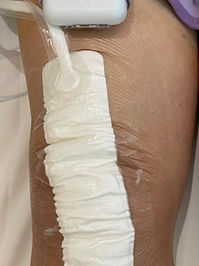
If you have a "suction type" dressing.
Leave it in place for the duration listed in your discharge instructions. Our protocols commonly use these dressings for about 7-10 days or until the battery dies, as long as they are staying dry and clean. Keep the wound clean and dry and protect the dressing during hygiene as instructed.
Around day #7-10, it is time to change the dressing.
You will remove this dressing:
You may use a mild, non-scented soap to wash around the area. Do not get your incision wet yet. It is common to see dry skin or dry glue overlying the incision. This is there intentionally. You may also see a thin scab or dried blood. Leave this in place, it is protecting your incision.
Replace with a dressing that looks like this:
This is a "border-type" non-adherent dressing. It will be changed every 1-3 days, or sooner if it gets wet or soiled.

Water exposure
Follow your current discharge instructions. In our milestone pathway, unrestricted showering over the uncovered incision waits until the wound is fully healed and without scabs, and submersion such as a tub, pool, or hot tub is delayed longer.
Call / Seek Urgent Help
Contact us for new drainage, the incision opening, spreading redness, increasing warmth, fever/chills with wound changes, or any wound appearance that concerns you. A photograph is often helpful for the team to review.
Your own discharge instructions and medication list always take priority. This guide is educational and does not replace individualized medical advice.
Institutional Clarification
This website is operated independently and is not affiliated with, endorsed by, or representative of Nebraska Medicine or the University of Nebraska Medical Center. Any clinical work performed in partnership with those institutions is conducted separately under institutional policies, governance, and privacy practices.